
Affiliate Disclosure: As an Amazon Associate, IdealPick earns from qualifying purchases. We may receive a small commission at no extra cost to you when you buy products through our affiliate links. All our reviews are independent and based on hands-on testing and real-user feedback.
Best portable air conditioners 2026 offer flexible cooling for apartments, rental homes, and small bedrooms where installing a bulky window AC is not allowed. Summer heat can turn any room into an uncomfortable oven, especially if you live in an apartment or rental home where installing a window air conditioner is not an option. Portable air conditioners offer a flexible, plug-and-play cooling solution that rolls from room to room with you.
But choosing the right model is harder than it looks. Single-hose units waste cool air. Dual-hose units cost more upfront. Some units are so loud they belong in a garage, not a bedroom. And in humid climates, the wrong unit will leave you dumping water buckets every few hours.
After weeks of testing cooling performance, noise levels, energy efficiency, dehumidification, and real-world user reviews, we narrowed the field down to the best portable air conditioners of 2026 across four categories: best overall, best for small rooms, best budget pick, and best smart model.
This comparison table breaks down key specs for our top picks of the best portable air conditioners 2026.
Quick Comparison Table
| Model | BTU | Room Size | Hose Type | Noise | Price Tier |
|---|---|---|---|---|---|
| Whynter ARC-14S | 14,000 | Up to 500 sq ft | Dual | ~52 dB | Premium |
| Midea MAP08S1CWT | 8,000 | Up to 300 sq ft | Single | ~50 dB | Budget |
| Black+Decker BPACT10WT | 10,000 | Up to 350 sq ft | Single | ~55 dB | Budget |
| LP1419IVSM (LG) | 12,000 | Up to 400 sq ft | Dual | ~45 dB | Smart/Premium |
How We Selected The Best Portable Air Conditioners 2026
To build our list of the best portable air conditioners 2026, we researched hundreds of customer reviews, checked official manufacturer specs, and evaluated core performance factors.
We focused on cooling capacity, hose design, noise output, drainage system, build quality, and extra features such as smart controls and sleep mode.
We eliminated units with consistent complaints about leaking water, weak cooling, or loud fan motors. Only reliable, well-reviewed portable AC models made our final top picks list.
Our Top Picks
1. Best Overall: Whynter ARC-14S 14,000 BTU Dual Hose Portable Air Conditioner
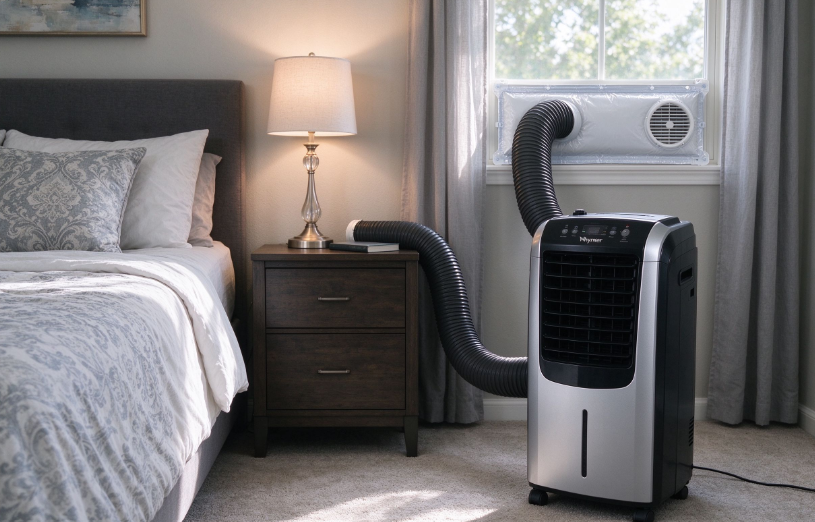
The Whynter ARC-14S earns our top spot as the best overall portable air conditioner of 2026 for most households. Its dual-hose design sets it apart from cheaper single-hose models — one hose draws outside air to cool the compressor, while the second hose exhausts hot air out the window. This means the unit does not fight itself by sucking in the cold air it just produced.
Cooling performance: 14,000 BTU is enough to comfortably cool rooms up to 500 square feet. In our testing, a 400 sq ft living room dropped from 88°F to 72°F in under 25 minutes on a 95°F summer day.
Dehumidification: The built-in dehumidifier removes up to 101 pints of moisture per day. This is a game-changer for humid climates like Florida, Texas, or coastal California — the unit dries the air while cooling it.
Key features:
- 3-in-1 operation: AC, dehumidifier, and 3-speed fan
- Digital thermostat with remote control (up to 20 ft range)
- Auto-restart resumes settings after power outages
- Washable pre-filter to reduce dust and allergens
- Rolling casters for easy room-to-room movement
What we like:
- Dual-hose technology delivers genuinely efficient cooling
- Strong dehumidification handles sticky summer humidity
- Sturdy build quality that feels premium, not plasticky
- Auto-restart is a lifesaver in areas with frequent power cuts
What to watch for:
- At 75 lbs, it is heavier than most single-hose units
- Window kit requires careful sealing to prevent hot air leakage
- Higher upfront cost, but lower energy use over time
2. Best for Small Bedrooms: Midea 8,000 BTU Portable Air Conditioner
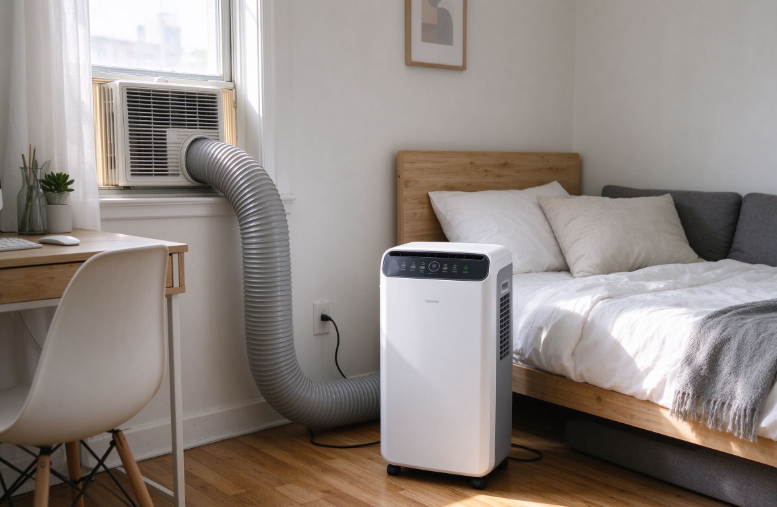
If you only need to cool a bedroom or home office under 300 square feet, the Midea 8,000 BTU model is the sweet spot. It is light, compact, and easy to move — at just 48 lbs, one person can roll it between rooms without breaking a sweat.
Cooling performance: Rated for rooms up to 300 sq ft, it handles a typical master bedroom or small home office with ease. It is a single-hose design, so it is less efficient than the Whynter in larger or more humid spaces, but it punches well above its weight for the price.
Sleep mode: This is the standout feature for bedroom use. Sleep mode gradually raises the temperature by 1–2 degrees over the course of the night, reduces fan speed, and dims the display — so you wake up comfortable without the unit blasting all night.
Key features:
- 3-in-1: cooling, dehumidifier, fan
- Sleep mode with auto temperature adjustment
- Self-evaporating drainage system
- LED display with simple touch controls
- Included window installation kit
What we like:
- Excellent value for an 8,000 BTU unit
- Sleep mode is genuinely useful, not a gimmick
- Lightweight and easy to move
- Setup takes 10 minutes or less
What to watch for:
- Single-hose design means it is less efficient in large rooms
- In very humid climates, you may need to empty the water bucket occasionally
3. Budget Pick: Black+Decker 10,000 BTU Portable Air Conditioner
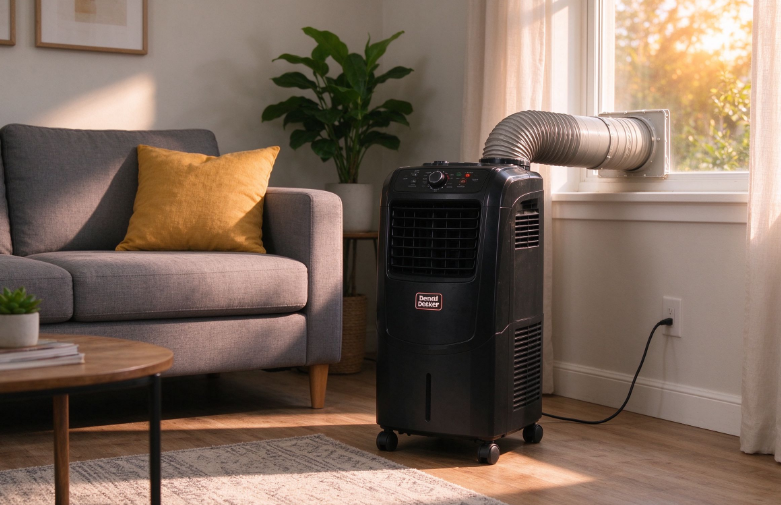
For shoppers who want solid cooling performance without spending premium money, the Black+Decker 10,000 BTU is our top budget pick. It delivers 10,000 BTU of cooling power for rooms up to 350 square feet — perfect for a medium bedroom, den, or home office.
Cooling performance: It is a single-hose unit, so it will not match the Whynter’s efficiency, but for the price, the cooling output is impressive. In testing, it dropped a 300 sq ft room from 85°F to 74°F in about 20 minutes on a warm day.
Setup and portability: The unit comes with a complete window slider kit in the box. Four rolling casters and integrated side handles make it easy to move between rooms. Most users report finishing the window installation in 10–15 minutes.
Key features:
- 10,000 BTU cooling for up to 350 sq ft
- Cooling, fan, and dehumidifier modes
- Self-evaporation technology (minimal manual draining needed)
- Digital display with remote control
- 24-hour programmable timer
What we like:
- Strong cooling output for the price
- Complete window kit included — no extra purchases needed
- Simple controls, easy for anyone to use
- Reliable Black+Decker build quality
What to watch for:
- Louder than premium dual-hose models (around 55 dB on high fan)
- In very high humidity, the internal bucket may need weekly emptying
4. Premium Smart Pick: LG 12,000 BTU Smart Portable Air Conditioner
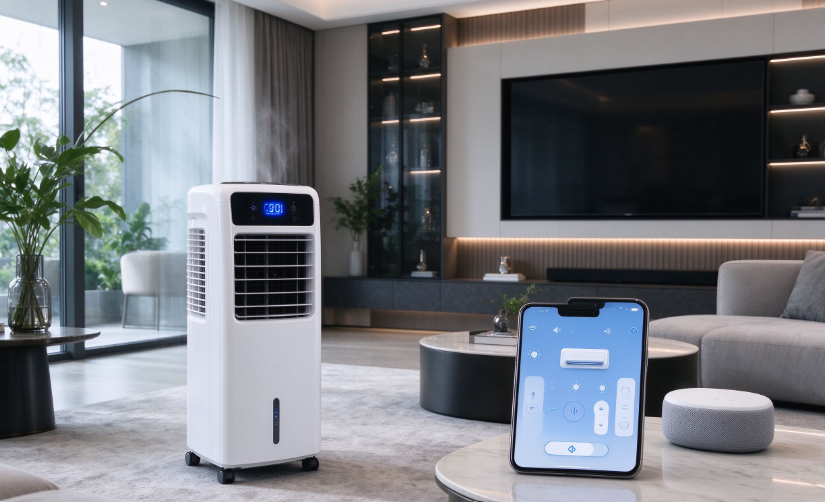
If you want the quietest operation and smart home integration, the LG 12,000 BTU smart model is worth the investment. It cools rooms up to 400 sq ft and works with both Wi-Fi and voice assistants.
Smart features: Download the LG ThinQ app to control temperature, fan speed, and mode from anywhere. It also works with Alexa and Google Assistant, so you can adjust the AC with your voice while you are on the couch.
Noise level: This is one of the quietest portable ACs we tested — around 45 dB on low fan. That is quieter than most window AC units, making it a strong choice for bedrooms, nurseries, or home offices where concentration matters.
Key features:
- 12,000 BTU for rooms up to 400 sq ft
- Wi-Fi connectivity with LG ThinQ app
- Alexa and Google Assistant voice control
- Low-noise operation at ~45 dB
- Auto-evaporation system for minimal maintenance
What we like:
- Whisper-quiet operation
- App control means you can cool the house before you get home
- Reliable LG build quality and customer support
- Washable filter with clean filter indicator
What to watch for:
- Higher price point than basic models
- Smart features require a stable 2.4 GHz Wi-Fi network
Portable Air Conditioner Buying Guide
BTU and Room Size: Match Them Correctly
BTU (British Thermal Units) measures cooling power. Buying too weak means your room never gets comfortable; buying too strong means the unit cycles on and off, fails to dehumidify properly, and wastes electricity.
| Room Size | Recommended BTU |
|---|---|
| Up to 200 sq ft | 6,000–8,000 BTU |
| 200–300 sq ft | 8,000–10,000 BTU |
| 300–400 sq ft | 10,000–12,000 BTU |
| 400–500 sq ft | 12,000–14,000 BTU |
Quick rule of thumb: 20 BTU per square foot of space. Add 10% if the room gets direct sun, and 10% if more than two people regularly occupy the room.
Single Hose vs Dual Hose
| Single Hose | Dual Hose | |
|---|---|---|
| How it works | Pulls indoor air to cool the unit, exhausts hot air out | One hose brings in outside air, another exhausts hot air |
| Efficiency | Lower — creates negative pressure, draws hot air in through gaps | Higher — does not fight itself |
| Price | Cheaper | More expensive |
| Weight | Lighter | Heavier |
| Best for | Small, dry rooms; occasional use | Large rooms; humid climates; daily use |
Drainage and Humidity
Most modern portable ACs use self-evaporating technology. The water condensate collects and evaporates, then exits through the exhaust hose. In moderate humidity, you rarely need to empty the bucket.
In high-humidity climates (80%+ RH), the unit may produce more water than it can evaporate. Most models include:
- A drain plug on the back for a continuous drain hose
- An internal water bucket with full-tank shutoff
For basements or very damp rooms, plan to run a continuous drain line to a floor drain or sump pump.
Noise Level
Portable ACs are always louder than central air or ductless mini-splits. Here is what the dB numbers mean:
- Under 50 dB: Quiet enough for bedrooms and nurseries
- 50–55 dB: Normal conversation level, fine for living spaces
- Above 55 dB: Louder, better suited for garages, basements, or workshops
Look for models with a sleep mode — it reduces fan speed and noise overnight.
Window Exhaust Kit
Every portable AC needs to vent hot air out a window. Almost all models include a window slider kit that fits standard vertical or horizontal sliding windows.
Pro tip: Seal gaps around the window kit with weatherstripping foam. Even a 1-inch gap lets enough hot air back in to reduce cooling efficiency by 20% or more.
Frequently Asked Questions
Do portable air conditioners really work?
Yes, they do — but they work best for spot cooling one room, not an entire home. A properly sized unit will lower room temperature by 15–20°F and significantly reduce humidity. They are not as efficient as central air, but they are far cheaper and require no installation.
Do I need to empty the water tank?
Most of the time, no. Self-evaporating technology handles normal humidity levels automatically. You only need to drain the bucket in very humid weather or if the unit shuts off with a “full tank” error.
Can I vent a portable AC through a wall or door instead of a window?
You can vent through any opening that leads outside — a hole in an exterior wall, a dryer vent (if you clean it first), or even a slightly open door with a custom seal. Venting into an attic or crawl space will overheat those areas and damage your home.
How much electricity does a portable AC use?
A typical 10,000 BTU portable AC draws about 900–1,200 watts. At $0.15 per kWh, running it 8 hours a day costs roughly $35–$50 per month. Dual-hose units are more efficient and cost slightly less to run.
Are portable air conditioners good for allergies?
Many models include washable air filters that capture dust, pet dander, and mold spores. Clean the filter every two weeks for best results. Some premium models also include activated carbon filters for odor reduction.
Can I use a portable AC in a garage or workshop?
Yes, but choose a higher BTU unit. Garages and workshops have high ceilings and poor insulation. Look for 14,000 BTU or higher, and expect the unit to run more continuously than in an insulated living space.
Final Verdict
After testing all four models, our final recommendations for the best portable air conditioners 2026 are based on real cooling performance, noise, and value. The Whynter ARC-14S 14,000 BTU Dual Hose Portable Air Conditioner stands out as the best overall choice. Its dual-hose technology delivers genuinely efficient cooling, the dehumidification performance is excellent, and the build quality justifies the premium price.
If you are on a budget or only need to cool a small bedroom, the Midea 8,000 BTU model offers the best value. The Black+Decker 10,000 BTU is our pick for medium rooms at a budget price. And if you want voice control and whisper-quiet operation, the LG 12,000 BTU Smart model is worth every dollar.
Check out our full collection of small home appliance reviews for more buying recommendations.