
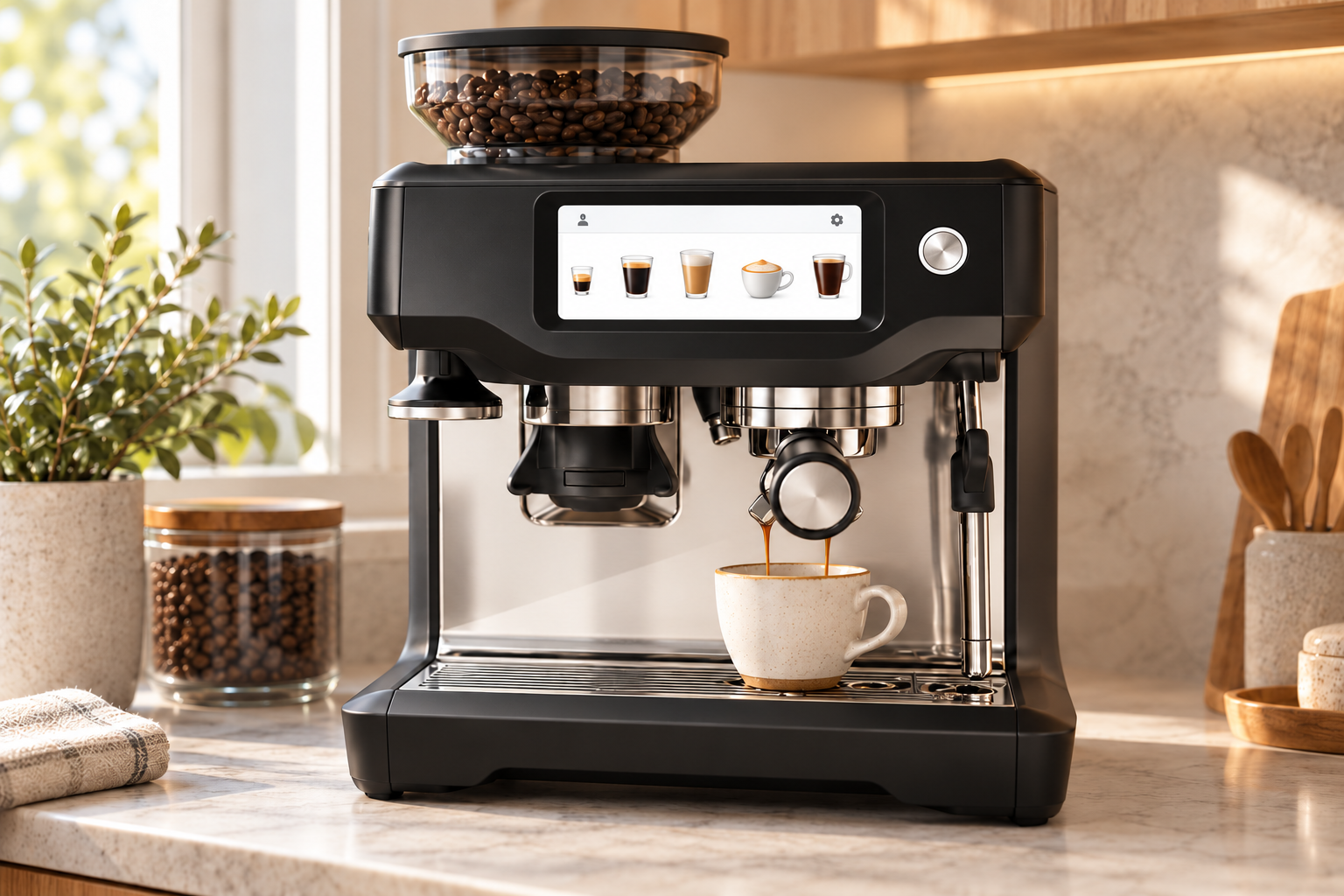
COFFEE MACHINE BUYING GUIDE
How to Choose an Espresso Machine: 5 Things to Know Before You Buy
To choose an espresso machine, start with the drinks you make and how much of the process you want to handle. Then compare your total machine-and-grinder budget, temperature stability, milk system, and cleaning requirements. Don’t choose by advertised pump pressure alone.
5 things to know before you buyResearch-Based AdvicePractical recommendations, clearly explained
Clear Feature ComparisonsFocus on what really matters
Practical Buying TipsFind the right fit for your routine
START HERE
Quick Answer: What Matters Most?
Choose your workflow before comparing specifications. For espresso, prioritize a suitable grinder and repeatable brewing. For lattes, decide whether you want to steam milk yourself or use automatic texturing. For less preparation work, look for dosing and tamping assistance—and check which steps remain manual.
New to espresso? Start with a machine whose preparation and cleaning routine you are willing to learn, rather than the longest feature list.
BUY WITH CONFIDENCE
5 Things to Check Before Buying an Espresso Machine
Focus on the factors that actually affect your daily coffee experience.
 01
Price vs. Value
A higher price can buy convenience and consistency—not automatically better coffee.
→ 02
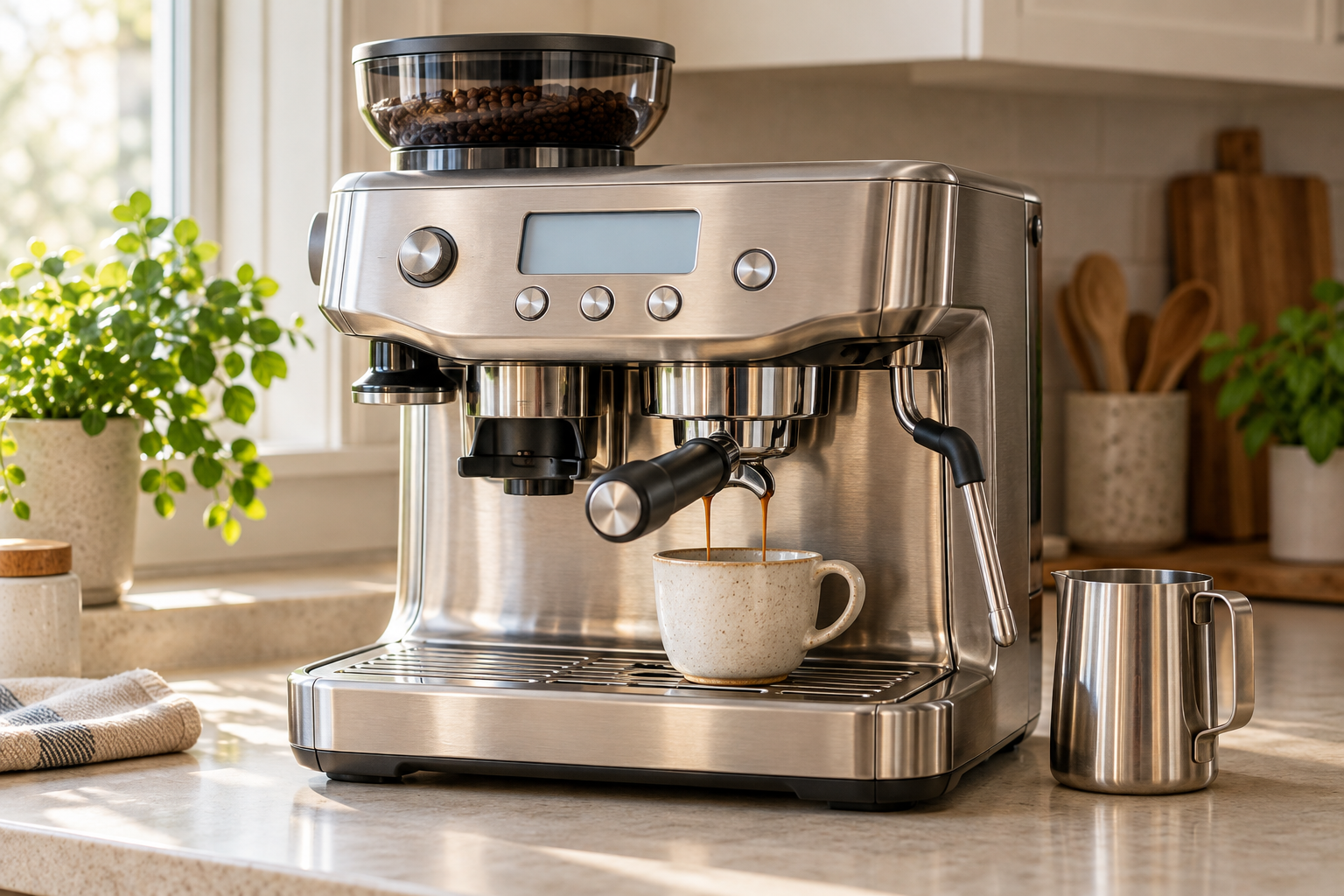
Pressure Isn’t Everything
A bigger Bar rating does not guarantee better extraction.
→03Temperature Stability
Consistent brewing conditions help make results more repeatable.
→ 04
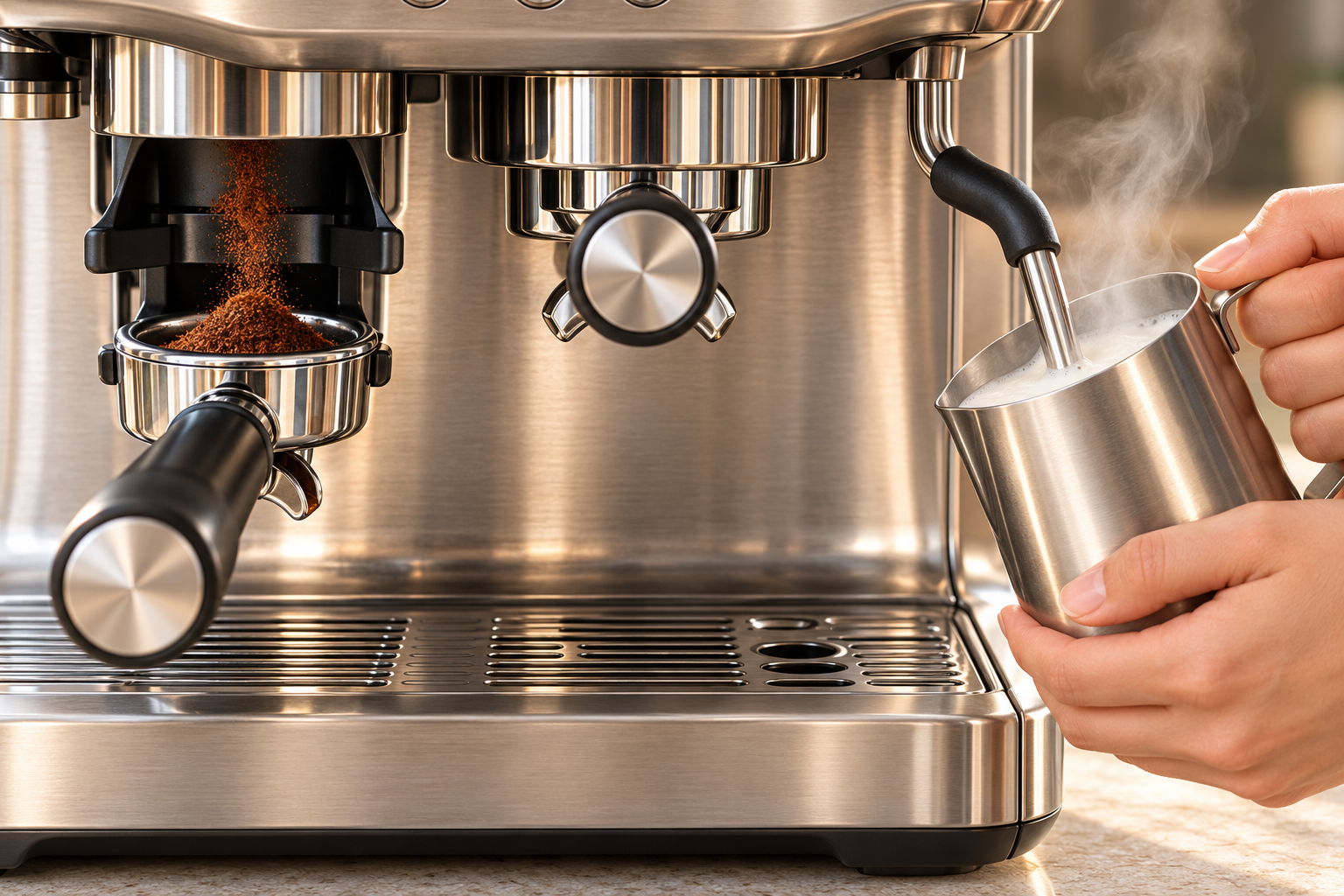
Milk Frothing
Choose manual control or automatic convenience based on your daily drinks.
→05Grinder & Daily Use
Match your grinder, controls, and maintenance needs to your routine.
→Choosing an espresso machine isn’t just about price or pressure ratings. The real difference lies in how consistently it makes coffee, how much work it requires, and whether its features fit your daily routine. Here’s what actually matters before you buy.
011. Price and Total Setup Cost
+
A higher price often buys more consistency and convenience—not automatically better coffee.
- Budget machines: Lower upfront cost, but may require more hands-on adjustments.
- Mid-range machines: Often offer a better balance of control, temperature management, and convenience.
- Premium machines: May add advanced controls, more capable milk systems, and a smoother daily workflow.
Budget for the complete setup
Include a separate espresso-capable grinder if your machine does not have one, plus any essential accessories, cleaning products, and replacement water filters. A built-in grinder can simplify the setup; a separate grinder gives you more freedom to upgrade later. Check what is included before buying extras.
Also consider recurring costs such as beans and maintenance supplies. Compare the total setup and ownership cost, rather than the machine’s price alone.
The takeaway: Pay for features that solve your problems, not features you may never use.
022. Brewing Pressure: Look Beyond the Bar Rating
+
15 Bar or 20 Bar? Don’t choose by the number alone.
A pump’s advertised maximum pressure doesn’t tell you how well a machine manages pressure during extraction. Espresso is commonly brewed at around 9 bar, depending on the brewing method.
What matters more is consistent extraction, suitable grind size, even puck preparation, and stable brewing conditions.
The takeaway: Look beyond the Bar rating. Overall brewing performance matters more than a bigger number.
033. Temperature Stability and PID Control
+
A machine that repeats good results can be more valuable than one with a longer feature list.
Temperature fluctuations can affect extraction and make shots harder to reproduce. More advanced temperature management, including PID control, can help maintain a more consistent brewing temperature.
However, temperature control works alongside grinder quality, water delivery, and preparation technique.
The takeaway: If you make espresso every day or enjoy experimenting with beans, temperature stability deserves more attention.
044. Manual vs. Automatic Milk Frothing
+
If you love lattes and cappuccinos, this feature can make the biggest difference to your routine.
| Manual steam wand | Automatic milk system |
|---|---|
| More hands-on control | Less effort |
| Requires practice | Easier to repeat drinks |
| Better suited to learning latte art | Convenient for everyday milk drinks |
Manual steaming gives you more control over milk texture, but it takes practice. Automatic systems simplify preparation, although cleaning is still necessary.
The takeaway: Choose a manual wand if you enjoy the craft. Choose automatic milk texturing if convenience comes first.
055. Grinder, Controls, Cleaning, and Daily Use
+
The best machine is one you’ll enjoy using every morning.
Before buying, check these three things:
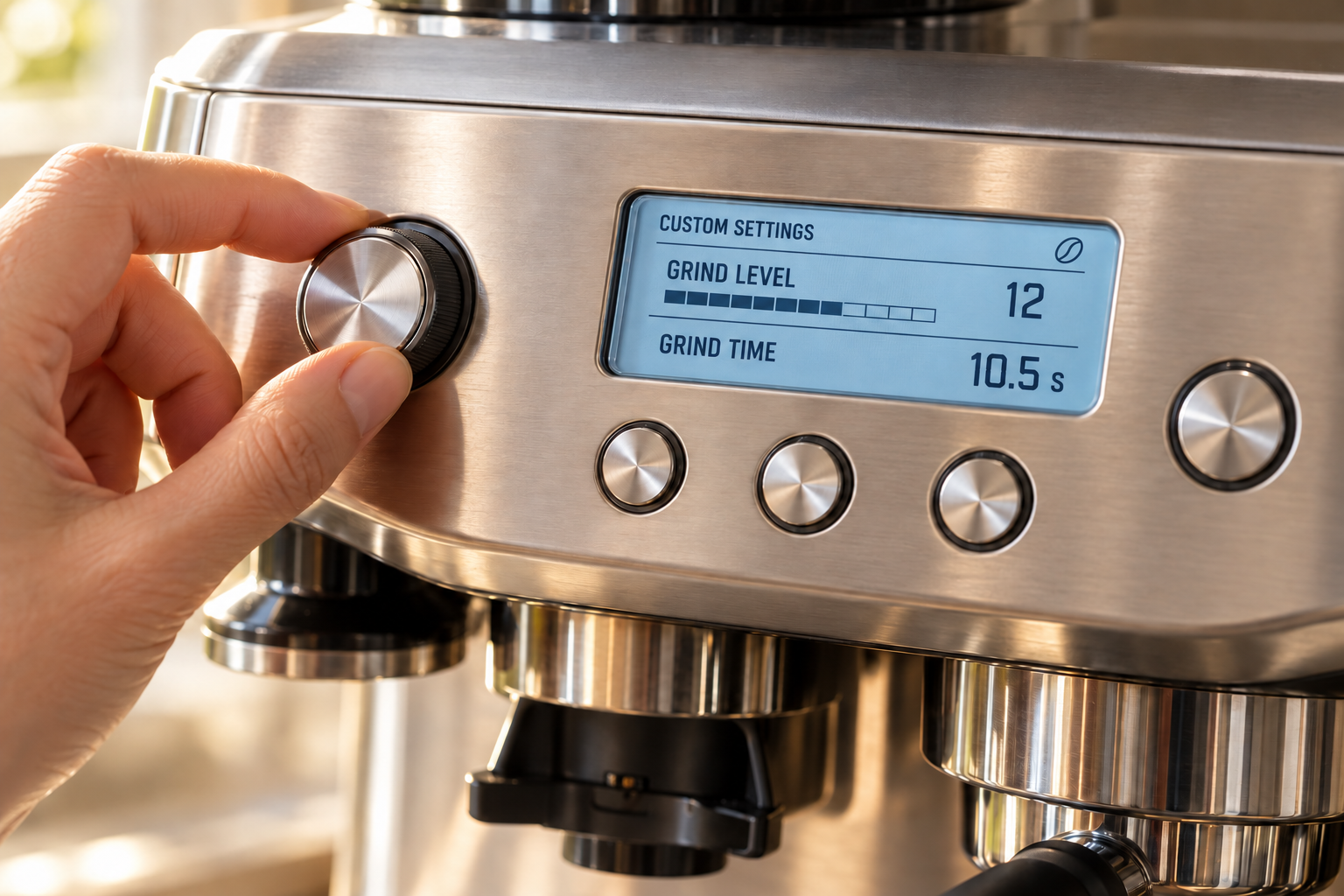
- Grinder: An integrated grinder saves space; a separate grinder offers more flexibility for upgrades.
- Controls: Touchscreen guidance and saved recipes simplify repeat drinks, while manual controls offer a more hands-on experience.
- Maintenance: Easy-to-clean components, accessible water tanks, and clear maintenance instructions make everyday ownership easier.
The takeaway: Don’t overlook the workflow. Small conveniences matter when you use the machine every day.
FIND YOUR FIT
How Much Automation Do You Need?
Compare the work a machine assists with and the steps you still handle. These Breville models illustrate three different levels of assistance within a portafilter workflow.
| Model | Tamping | Milk Texturing | Guidance | Best Fit |
|---|---|---|---|---|
| Barista Express BES870XL | Manual | Manual steaming | Buttons and dial controls | Users who enjoy learning hands-on preparation |
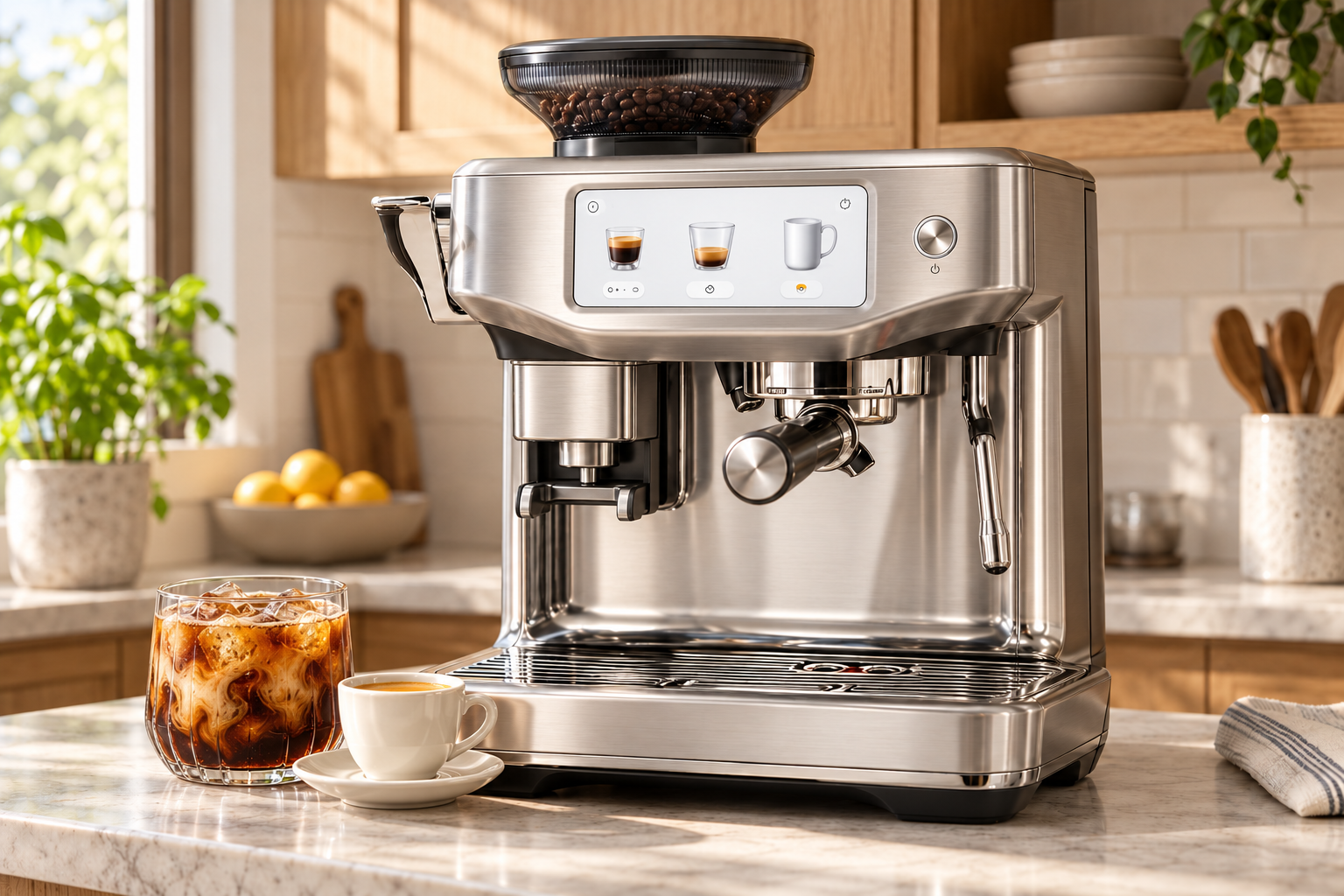
| Barista Touch BES880BTR | Manual | Automatic milk texturing | Touchscreen drink guidance | Users who want simpler milk preparation |
| Barista Touch Impress BES881BSS | Assisted, using a tamp lever | Auto MilQ automatic milk texturing | Touchscreen guidance and assisted dosing | Users who want less manual puck preparation |
All three use a portafilter and require hands-on steps. Assisted tamping and automatic milk texturing do not make a machine fully automatic.
What still needs your attention?
On the Express, you prepare and tamp the coffee, move and lock in the portafilter, and steam the milk. The Touch automates milk texturing but leaves puck preparation manual. The Touch Impress assists dosing and tamping, but you still operate the lever, handle the portafilter, and pour the milk. Grind adjustment and cleaning remain part of ownership.
If you want the machine to manage grinding, brewing, and used coffee disposal with less portafilter handling, compare bean-to-cup super-automatic machines separately. Check each model’s milk preparation and cleaning requirements.
YOUR COFFEE, YOUR WAY
Which Espresso Machine Fits Your Routine?
Your coffee habits should determine your choice.
- On a tight budget? Focus on the brewing fundamentals and budget for a suitable grinder.
- Want an all-in-one setup? Consider a semi-automatic machine with a built-in grinder.
- Drink lattes every day? Prioritize steam performance or automatic milk texturing.
- Prefer convenience? Look for guided controls, saved recipes, or a super-automatic machine.
- Enjoy experimenting? Choose a machine that gives you greater control over grinding and extraction.
BEFORE YOU BUY
Your Espresso Machine Buying Checklist
Check the machine’s dimensions, included accessories, and care instructions before committing.
THE NEXT STEP
Compare Breville Espresso Machine Reviews
Compare how much each machine automates—and which steps you still handle yourself.
Breville Barista Touch Impress Review
Assisted dosing and tamping, touchscreen guidance, and automatic milk texturing reduce manual work. You still move and lock in the portafilter, use the tamp lever, and pour the milk.
Read Review →Breville Barista Touch Review
Touchscreen guidance and automatic milk texturing simplify milk drinks. Coffee distribution, tamping, and moving and locking in the portafilter remain manual.
Read Review →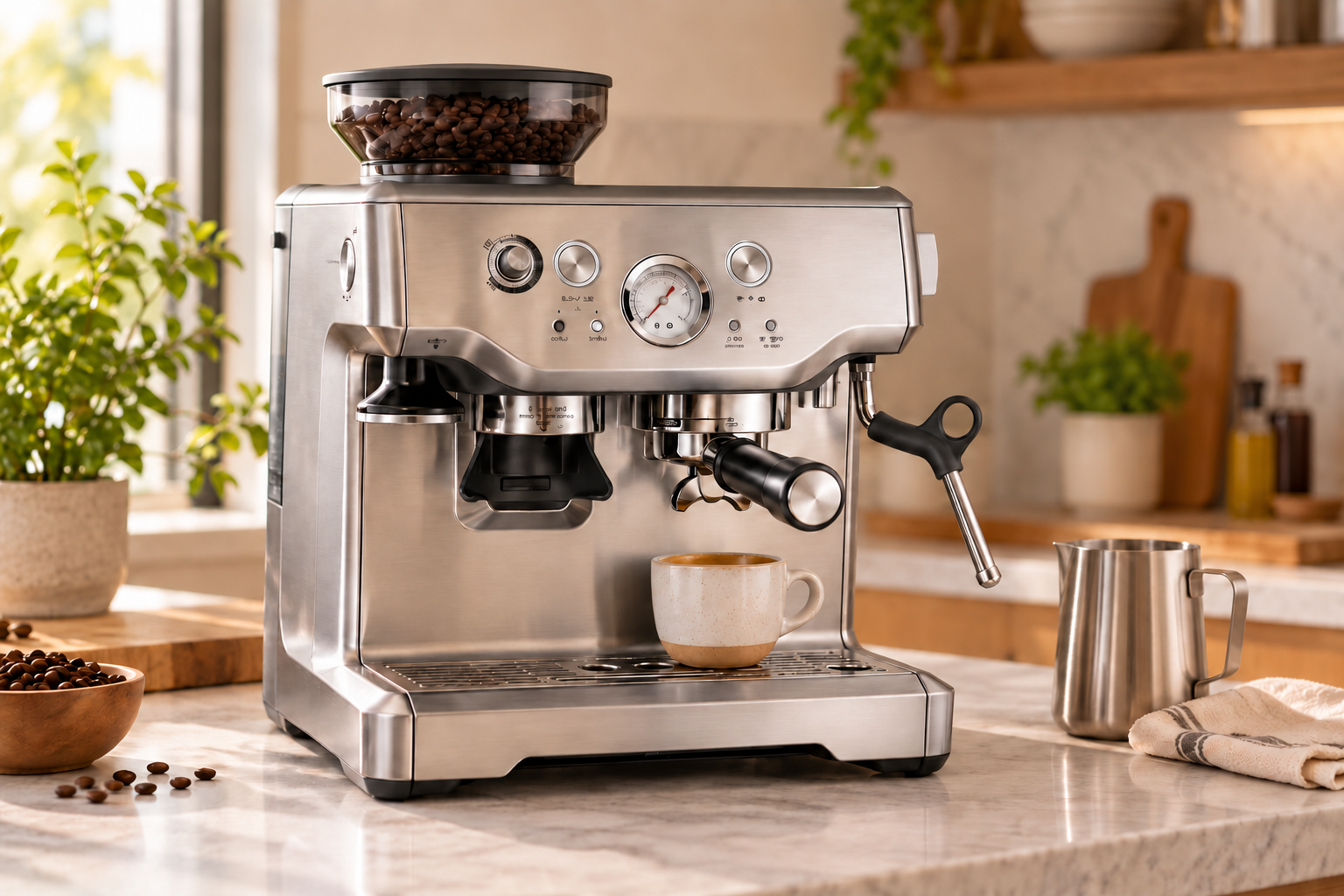
Breville Barista Express Review
A built-in grinder keeps the setup compact, while tamping and milk steaming remain manual. Expect more hands-on preparation, grind adjustment, and practice with each drink.
Read Review →COMMON QUESTIONS
Frequently Asked Questions
What should a beginner look for in an espresso machine?
+
Start with a suitable grinder, repeatable brewing, accessible cleaning, and controls you are comfortable learning. If you mainly drink lattes, automatic milk texturing may make the routine easier. Include the full setup in your budget.
Is 20 bar better than 15 bar?
+
Not by itself. Advertised maximum pump pressure does not describe how consistently a machine controls extraction. Look at brewing performance, grind suitability, and temperature stability together.
Do I need a separate grinder?
+
A machine with an integrated grinder can provide a compact setup. A separate espresso-capable grinder gives you more flexibility to choose and upgrade components. Check whether the grinder offers the adjustment range your brewing method needs.
Is the Barista Touch Impress fully automatic?
+
It assists dosing and tamping and automates milk texturing, but you still handle the portafilter, use the tamp lever, and pour the milk. Consider it an assisted portafilter workflow rather than a one-touch bean-to-cup system.
Is automatic milk texturing maintenance-free?
+
No. Automatic texturing reduces the skill needed to prepare milk, but the wand and milk-contact parts still require cleaning according to the manufacturer’s instructions.
Final Verdict: Choose the Workflow You Will Enjoy
A good espresso machine isn’t necessarily the most expensive one. It’s the machine that delivers the right balance of coffee quality, consistency, convenience, and control for your needs.
Before spending more, decide what you drink, how often you make it, and how much of the process you want to handle.